Slouching While Coding? A Practical Posture Guide That Actually Sticks
If you keep slouching while coding, you don’t need a perfect ergonomic lab.
You need a repeatable system that catches bad posture early and makes correction easy.
This guide gives you that system: a desk setup baseline, a simple coding posture checklist, and a 14-day routine you can actually maintain.
Why Coders Slouch (Even With “Good” Chairs)
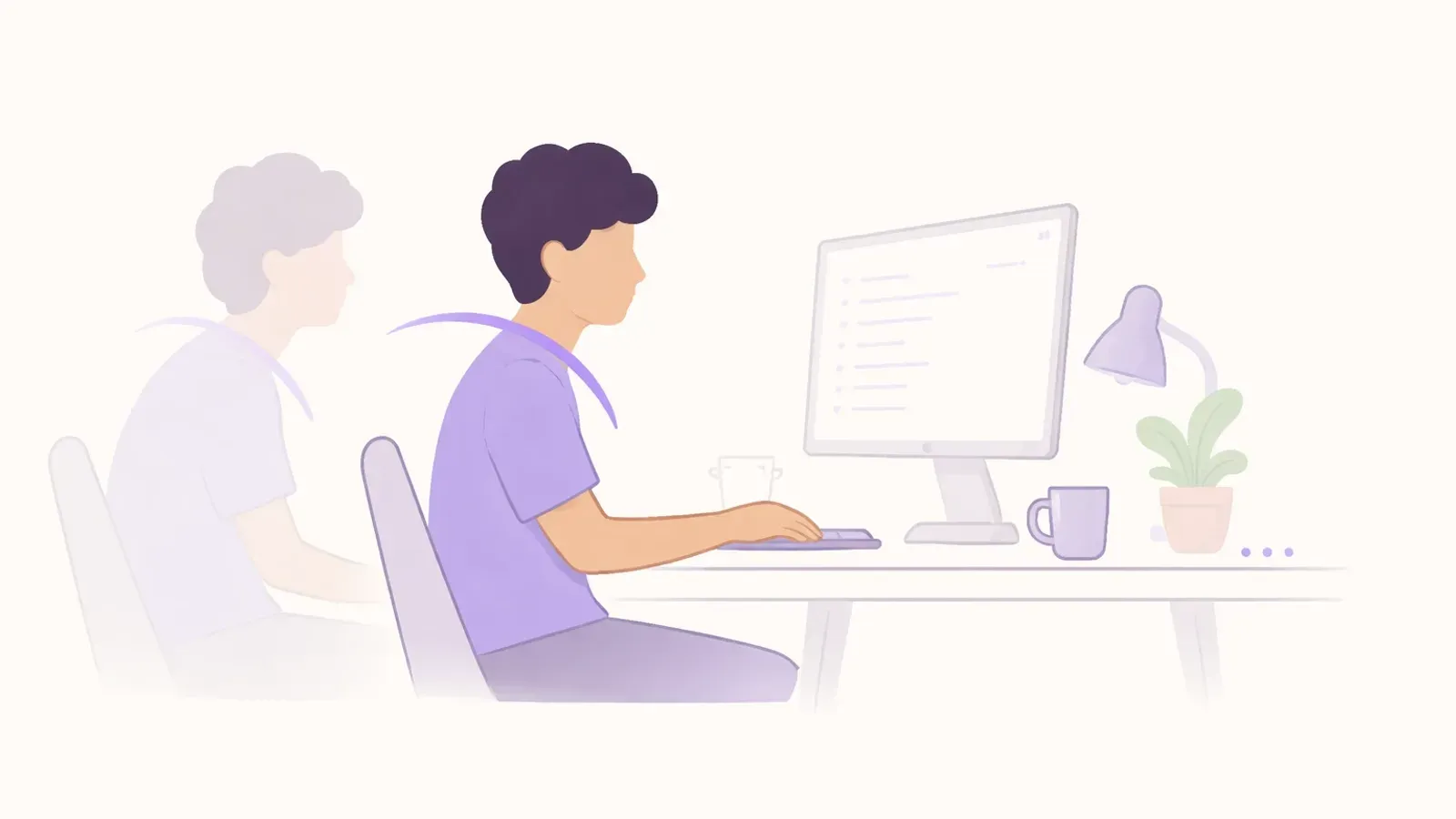
Most slouching during programming happens because of cumulative drift, not one dramatic mistake.
Common triggers:
- long focus blocks with no movement
- screen too low, pulling your head forward
- keyboard/mouse position that rounds shoulders
- fatigue late in the day
Your posture usually degrades gradually over 30–90 minutes. So your plan should target drift, not perfection.
The 3 Signals You Should Track
Forget “sit up straight all day.” Measure these instead:
- Forward-head episodes (chin drifting toward the screen)
- Rounded-shoulder time during deep work blocks
- End-of-day neck/upper-back stiffness (0–10)
If these trend down week over week, your system is working.
Fast Desk Baseline (10 Minutes)
Set this once before you optimize anything else:
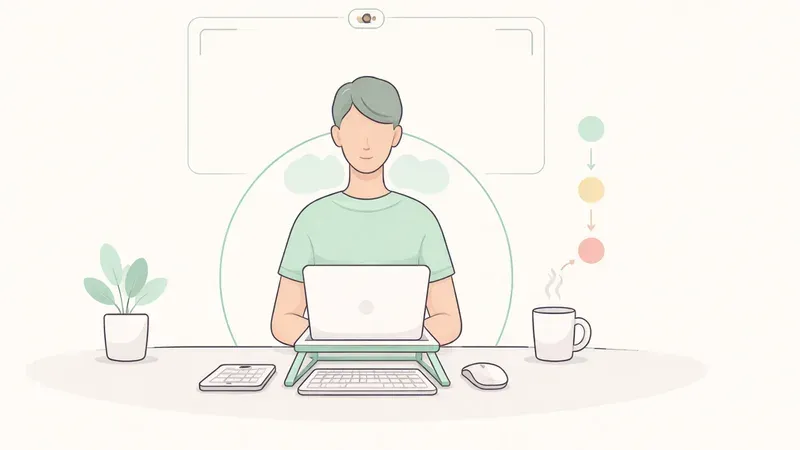
- top of screen near eye level
- elbows roughly 90–110° with relaxed shoulders
- keyboard close enough to avoid reaching
- feet stable (floor or footrest)
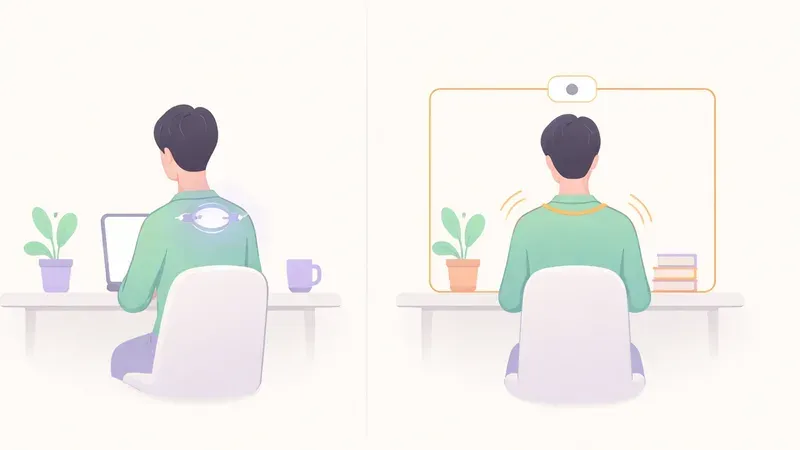
- webcam aligned with your normal seated position
This isn’t about textbook geometry. It’s about reducing the “gravity pull” into slouch.
Coding Posture Checklist (Use Between Commits)
Run this 20-second check at natural break points:
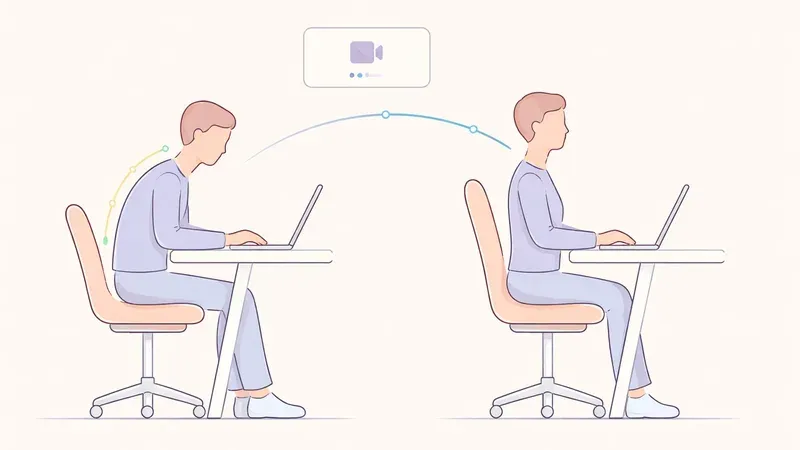
- ears roughly over shoulders
- ribs stacked over pelvis (not collapsed)
- shoulders down and slightly back (not pinned)
- jaw relaxed, eyes level with upper screen third
- both feet planted
Tie it to something you already do—like pushing code, running tests, or switching branches.
Micro-Break Protocol for Programmers
Use the 40/90 rule:
- every 40 minutes: stand or move for 60–90 seconds
- every 2–3 cycles: do one quick reset (5 shoulder rolls + 3 deep breaths)
This prevents long static load, which is usually what drives coding-related neck and upper-back discomfort.
Should You Use a Posture App While Coding?
For many developers, yes—if reminders are subtle and adjustable.
Best use case:
- app cues detect drift
- micro-break protocol handles recovery
- weekly review tracks adherence and discomfort trend
Treat the app as a trigger, not the whole solution.
14-Day Anti-Slouch Plan for Coding Sessions
Days 1–3: Baseline
- keep reminders low/medium
- track stiffness score at day end
- note when slouching appears most (morning vs afternoon)
Days 4–7: Tune
- reduce false alerts first
- adjust monitor and keyboard only if needed
- lock one break cadence you can sustain
Days 8–14: Stabilize
- focus on consistency over strictness
- keep only cues that improve response rate
- compare weekly trend, not individual bad sessions
If pain is persistent, worsening, or radiating, consult a qualified clinician.
Mistakes That Keep Coders Stuck
- chasing perfect posture instead of repeatable habits
- setting reminders too aggressively
- changing too many variables at once
- skipping movement because “I’m in flow”
Good posture for coding is a behavior loop, not a one-time setup.
Final Take
If you’re slouching while coding, the fix is simple:
- set a low-friction desk baseline,
- add small in-context posture checks,
- protect long sessions with micro-breaks.
Do that for two weeks, and most people notice less stiffness and faster self-correction.
FAQ
Q: How often should I correct posture while coding?
A: Use short checks at natural break points (commits, test runs, context switches) plus a micro-break every ~40 minutes.
Q: Can posture exercises alone fix coding slouch?
A: Exercises help, but they’re not enough without desk setup and on-the-job behavior cues.
Q: Is a standing desk required?
A: No. It can help variation, but seated setup quality and movement cadence matter more.
Q: How quickly can I feel improvement?
A: Many coders notice reduced neck/upper-back stiffness within 1–2 weeks when they follow a realistic routine consistently.